
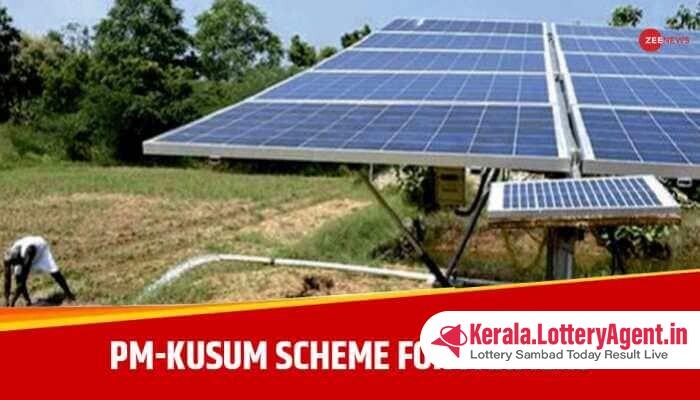
From the heart of New Delhi comes a transformative story of innovation and empowerment—a narrative where the Indian government hinges its hopes on the rays of the sun to brighten the lives of its farmers. Launched in March 2019 and further expanded in September 2023, The Pradhan Mantri Kisan Urja Suraksha evam Utthaan Mahabhiyan (PM-KUSUM) Scheme, symbolizes a quantum leap in sustainable agricultural practices in India.
The PM-KUSUM Scheme heralds a new dawn for the nation’s farming sector, underpinning its aims with a solid foundation made up of three core objectives: the progressive de-dieselization of the agriculture segment to curb reliance on fossil fuels, bolstering energy and water security for the Indian farmer, and the promise of augmented incomes in tandem with a significant reduction in environmental pollution.
This pioneering scheme unfolds across three primary components:
Component ‘A’ involves the development of 10,000 MW of decentralized ground or stilt-mounted, grid-connected solar or other renewable energy-based power plants. These are innovatively situated on the very lands cultivated by farmers, marrying energy creation with cultivation.
Component ‘B’ sees the ambitious roll-out of 14 lakh standalone off-grid solar water pumps, envisaged to revolutionize irrigation practices at the grassroots level.
Finally, Component ‘C’ seeks to solarize 35 lakh existing grid-connected agriculture pumps, harnessing solar power at its most immediate source – the farm itself – through a process known as feeder level solarization (FLS).
The individuals and collectives standing to benefit from these components are as varied as the Indian agricultural landscape. Ranging from individual farmers to Water User Associations, Primary Agriculture Credit Societies to Communities/Cluster-Based Irrigation Systems, these beneficiaries form the backbone of India’s food production and now stand to be the vanguard of its energy revolution.
Financial aid is the lifeblood of PM-KUSUM, injecting the necessary capital to transform this ambitious vision into a vivid reality. As part of its support structure, a Procurement Based Incentive (PBI) at the rate of 40 paise per kWh, or Rs. 6.60 lakhs per MW a year, whichever is lower, is dispensed to the DISCOMs for purchasing solar or other renewable power generated under the scheme. This incentive stretches over five years from the Commercial Operation Date of the plant, with DISCOMs standing to garner a substantial Rs. 33 lakh per MW in that period.
Additionally, for the solarization of individual pumps under Component-B and Component-C, the Central Financial Assistance (CFA) equates to 30% of either the benchmark cost released by the Ministry of New and Renewable Energy (MNRE) or the tender-discovered system prices, adhering to whatever is lower. This aid takes a generous leap to 50% for the far-flung regions of the Northeast, Jammu & Kashmir, Ladakh, Himachal Pradesh, Uttarakhand, the Lakshadweep, and Andaman & Nicobar Islands.
Within the intricate financial tapestry of PM-KUSUM, balance plays a significant role. Beyond central assistance, state or union territory support must meet the 30% threshold, with the remainder of the cost to be borne by the farmer beneficiary. Nevertheless, the scheme also accommodates scenarios where state support is not viable, allowing for central assistance to remain at 30% while the lion’s share of the investment, 70%, falls upon the farmers.
To underscore the unwavering commitment to direct capital towards greener practices, the scheme provides a hearty CFA of Rs 1.05 crore per megawatt for the solarization of agricultural feeders. This practice liberates states and territories from mandatory financial contributions and can operate under Capital Expenditure (CAPEX) or Renewable Energy Service Company (RESCO) models.
As testament to the scheme’s success and reach, data as of 8 February 2024 paints an impressive portrait: over 2.95 lakh standalone off-grid solar water pumps have been installed under the PM-KUSUM umbrella. This installation milestone was proudly shared by the Union Power and New & Renewable Energy Minister in a written statement, addressing a question in the Lok Sabha.
In an era where sustainable development is not just the need of the hour but a mandatory pivot for the progress of nations, PM-KUSUM stands as a beacon of hope and change. It redefines the agricultural industry’s relationship with energy, turning every farm into a potential power plant and ensuring that India’s farmers are not just key players in the country’s food security but also active architects in its energy landscape.