
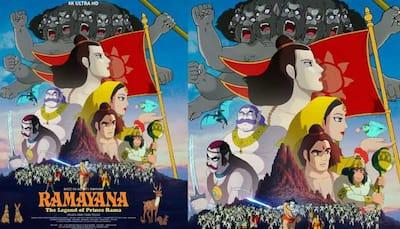
New Delhi: In a groundbreaking fusion of cultures and storytelling, “Ramayana: The Legend of Prince Rama” stands out as a pivotal achievement in animation history. Conceived by the visionary Yugo Sako and co-directed by the talented Koichi Sasaki and Ram Mohan, this film is one of the earliest anime adaptations of an Indian epic. Completed in 1993, it has not only revolutionized the animation industry but has also introduced the vibrant narratives of Indian mythology to audiences worldwide, seen through the meticulous lens of Japanese anime artistry.
Yugo Sako’s deep admiration for Indian culture was the driving force behind “Ramayana: The Legend of Prince Rama.” Initially inspired while working on a documentary about archaeological excavations in India, Sako envisioned bringing the timeless epic of the Ramayana to global screens. He visited India numerous times, immersing himself in its rich culture and stories, and eventually found the iconic tale that would become the backbone of his animated masterpiece. The story’s universal themes of love, friendship, and loyalty resonated with Sako, who believed animation would be the perfect medium to convey these values to both children and adults across the globe.
The film was a significant undertaking, involving a team of 450 artists who painstakingly created the animation using nearly 100,000 hand-drawn cells. Yugo Sako opted for traditional hand-drawn animation over computer-generated imagery, believing it captured the warmth and humanity intrinsic to the Ramayana. This labor-intensive process awarded the film an emotional depth and authenticity that touched audiences worldwide. Moreover, the film’s impact is evident as many of the animators involved went on to contribute to other iconic productions like Pokémon, Dragon Ball Z, Doraemon, and Studio Ghibli films, further solidifying the film’s influence and legacy within the animation industry.
“Ramayana: The Legend of Prince Rama” is noteworthy not only for its storytelling and animation excellence but also for its unique collaboration that melded Japanese anime techniques with Indian storytelling traditions.
. This pioneering blend of artistry and culture had never been attempted before and set the stage for future cross-cultural collaborations in the world of animation.
Now, years after its original release, “Ramayana: The Legend of Prince Rama” has been remastered in stunning 4K resolution. This modernized version is poised for its first-ever pan-India theatrical release, available in four languages including English, Hindi, Tamil, and Telugu. The timing of its release during the Indian festive seasons of Dussehra and Diwali is a strategic choice, aiming to engage audiences who are in a celebratory mood, ready to dive into a cinematic experience that is both culturally rich and visually captivating.
This latest release of “Ramayana: The Legend of Prince Rama” represents more than just a reintroduction of a classic film; it is a celebration of the timeless Indian epic through the innovative medium of Japanese anime. The distribution across India is managed by Geek Pictures India, AA Films, and Excel Entertainment, ensuring a wide reach and accessibility for audiences nationwide. There is a palpable sense of anticipation that this film will once again capture the imagination and hearts of viewers, old and new.
Yugo Sako, who passed away in 2012, had once expressed his desire for a major theatrical release of his beloved film. This recent 4K remaster, reaching audiences across India, is a testament to his vision and dedication to cultural storytelling through animation. As the film graces theaters during one of India’s most auspicious times of the year, it stands as a reminder of the power of animation in bridging cultures and sharing the ageless wisdom of love, friendship, and loyalty found in the Ramayana.
“Ramayana: The Legend of Prince Rama” is not just a film; it’s a historic collaboration that continues to inspire, proving that stories are not bound by geographical limits and that the fusion of art forms can lead to remarkable creations. As it makes its mark on the big screen once again, it invites audiences to experience the magic of an Indian epic reimagined through the brilliance of Japanese anime—a true cinematic gift for the festive season.