
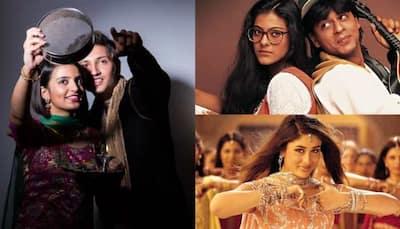
Karwa Chauth, a festival deeply rooted in Indian tradition, is celebrated with great enthusiasm and devotion by married women for the well-being and longevity of their husbands. This vibrant cultural event sees women fasting from sunrise to moonrise, embodying a commitment that is as much about love and sacrifice as it is about the rituals themselves. Bollywood, the heart of Indian cinema, has consistently portrayed the depth and cherished essence of this festival through its films, providing audiences with expressive depictions that resonate widely. Offering up a blend of emotion, tradition, and storytelling, Bollywood allows us to experience Karwa Chauth in its multifaceted glory. Here, we take a closer look at six films that beautifully capture the culture and sentiment attached to Karwa Chauth.
One of the most timeless classics in Indian cinema, Dilwale Dulhania Le Jayenge (1995), features a Karwa Chauth sequence that has rendered itself unforgettable in the minds of audiences. In this masterpiece, the moments shared by Simran (Kajol) and Raj (Shah Rukh Khan) signify a deep emotional connection and commitment beyond the boundaries of tradition. As Simran observes the fast for Raj, the film eloquently emphasizes the emotional bond they share, highlighted during the moonrise, in a scene that has become iconic for its depiction of pure and heartfelt love. This moment not only showcases Karwa Chauth but cements its importance in the narrative of enduring love.
Baghban (2003) also explores the festival within its narrative, weaving a beautiful tapestry of love, sacrifice, and family values. The romance between characters played by Amitabh Bachchan and Hema Malini is beautifully encapsulated during the Karwa Chauth scene, as it communicates their steadfast devotion to one another. Through a screen lit by the light of love and understanding, viewers witness an enduring bond that has flourished over years of companionship. The film profoundly underscores the significance of the festival in celebrating resilient relationships.
With its grand gestures and vibrant visuals, Kabhi Khushi Kabhie Gham (2001) offers an exquisite portrayal of Karwa Chauth. The film’s rich tapestry of family values and love is highlighted by the pivotal scenes shared between Rahul (Shah Rukh Khan) and Anjali (Kajol), where the blend of traditional attire and emotional resonance portrays the festival’s joy and devotion. This celebration of Karwa Chauth connects seamlessly to the film’s overarching theme of familial bonds and the cultural importance of maintaining them through both turbulent and peaceful times.
.
In a slightly different take, Ishq Vishk (2003) presents the festival through the lens of youthful romance. As Payal (Amrita Rao) observes the fast for Rajiv (Shahid Kapoor), her actions symbolize the blossoming of deep feelings and hopes for the future they might share. This light-hearted yet emotionally impactful depiction of Karwa Chauth resonates with young audiences who find joy in connecting with these age-old traditions, reflecting how love and dedication transcend generations.
Hum Dil De Chuke Sanam (1999) delivers a dramatic and emotionally intense take on Karwa Chauth. Nandini (Aishwarya Rai), in conflict with her feelings, fasts for Vanraj (Ajay Devgn) despite her love for another. The film intricately intertwines the festival into Nandini’s journey, illustrating the complex emotional landscape of commitment, respect, and the sanctity of marriage. This portrayal delves into the deeper meanings of sacrifice and devotion that Karwa Chauth embodies, adding an intense layer of sentiment to the narrative.
Lastly, Biwi No. 1 (1999) approaches the festival with a comedic twist. The film balances humor with tradition, as Pooja (Karishma Kapoor) fasts for her husband Prem (Salman Khan) while being unaware of his extramarital activities. Despite its comedic approach, Biwi No. 1 underscores the cultural values and the significance of traditions intertwined with marital dynamics, painting a picture of the varied emotional landscapes within relationships.
Bollywood continues to depict Karwa Chauth in ways that resonate with audiences across generations, emphasizing the festival’s emotional depth and cultural importance. Through these cinematic lenses, the themes of love, devotion, and sacrifice find a place in the hearts of viewers, celebrating the rich traditions of Indian culture. Whether in a large-scale dramatic narrative or a light-hearted romantic sequence, the essence of Karwa Chauth remains a testament to love and togetherness in Indian cinema.