
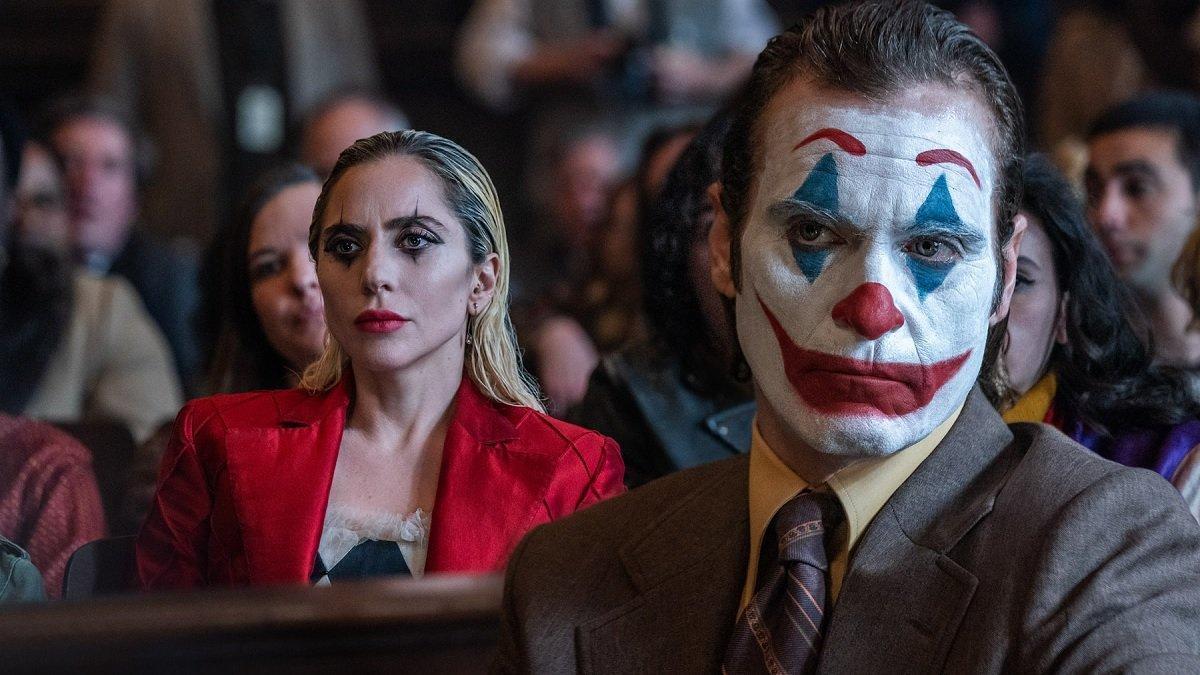
Todd Phillips returns with “Joker: Folie à Deux,” a sequel that vibrates with the subtle resonance of Shakespearean undertones. Moving beyond the gritty origins of its 2019 predecessor, “Joker,” the film takes its viewers deeper into the chaotic psyche of Arthur Fleck, portrayed by Joaquin Phoenix, who once again embodies the character with a remarkable intensity akin to the brooding Prince Hamlet. This time, however, Arthur delivers his soliloquies not only through words but also through song.
Since the chaos he unleashed, sparking an uprising among Gotham’s deprived communities, Arthur now finds himself confined in Arkham State Hospital. Having been accused of multiple murders — including that of TV icon Murray Franklin (Robert De Niro), an act broadcast on live television — Arthur’s existence resonates with viewers as a tragic yet self-fashioned antihero. His story mirrors Hamlet’s, not through familial monologues in Danish castles, but through vibrant reveries within his own fragmented mind, entangled between reality and the imagination’s multiverse.
The narrative picks up two years later, highlighting both Arthur’s trial and the systemic neglect faced by society’s fringes, who once rallied behind him. Enter Harvey Dent, the ambitious Assistant District Attorney played by Harry Lawtey. Dent’s pursuit of justice against Arthur is tinged with self-interest as he hopes the highly publicized trial will bolster his career.
A pivotal moment arrives when Arthur encounters Lee (performed by Lady Gaga), during one of his walks past Arkham’s music therapy class. Lee, also a patient with a harrowing past, shares a connection with Arthur reminiscent of threads from another life. Her own past is steeped in tragedy, her mother’s cruelty having led her to set their home ablaze, a crime that landed her in Arkham. This shared history creates an unspoken bond between the two, resonating like an echo of Gotham’s darker alleys.
.
As orchestrations unfold, Arthur’s trial garners a fanatical following thanks in part to Lee’s proactive escapism. Lady Gaga’s portrayal of Lee is a dance of complexity, introducing a character that holds the potential to tip either towards madness or liberation, though it doesn’t quite eclipse Margot Robbie’s palpable rendition of Harley Quinn.
Director Philllips, propelled by Phoenix’s own suggestions, injects a layer of the musical into the sequel, infusing vibrant life into the film’s inherent darkness. This transformation, peppered with an exquisite animation sequence that opens the film, proves to be an ingenious pivot. It keeps the core themes alive—weaving together alienation, social critique, and the unending quest for identity—all while punctuating it with lively, rhythmic musicals composed by Hildur Guðnadóttir, whose talent earned accolades with the original Joker score.
Visually, the film is a spectacle. The camera work by cinematographer Lawrence Sher captures Joaquín Phoenix in moments that capture beauty in Arthur’s decay—a skeletal form yet rich with raw emotion. Arthur’s performance as the Joker remains compelling, a magnet for the audience’s gaze as they navigate through layers of animated chaos and melancholic resolve. His Gaunt visage reflects a life oscillating on the brink of breakdown or enlightenment with each twitch of his fervent eyes or among the vibrant colors of his clown persona.
While “Folie à Deux” may stumble with a less tightly interwoven narrative than its predecessor, it still delivers moments of authentic cinematic magic—a testament to Phoenix’s potent craft and Phillips’ daring directorial steps into musical narrative. Despite its imperfections, Arthur’s journey continues to captivate, much like Hamlet’s quest, reminding audiences of the thin line between sanity and madness.
“Joker: Folie à Deux” is now captivating audiences in theaters across the world, offering them a glimpse into a conflicted mind where music and madness interlace, creating a kaleidoscope of humor, horror, and human frailty.