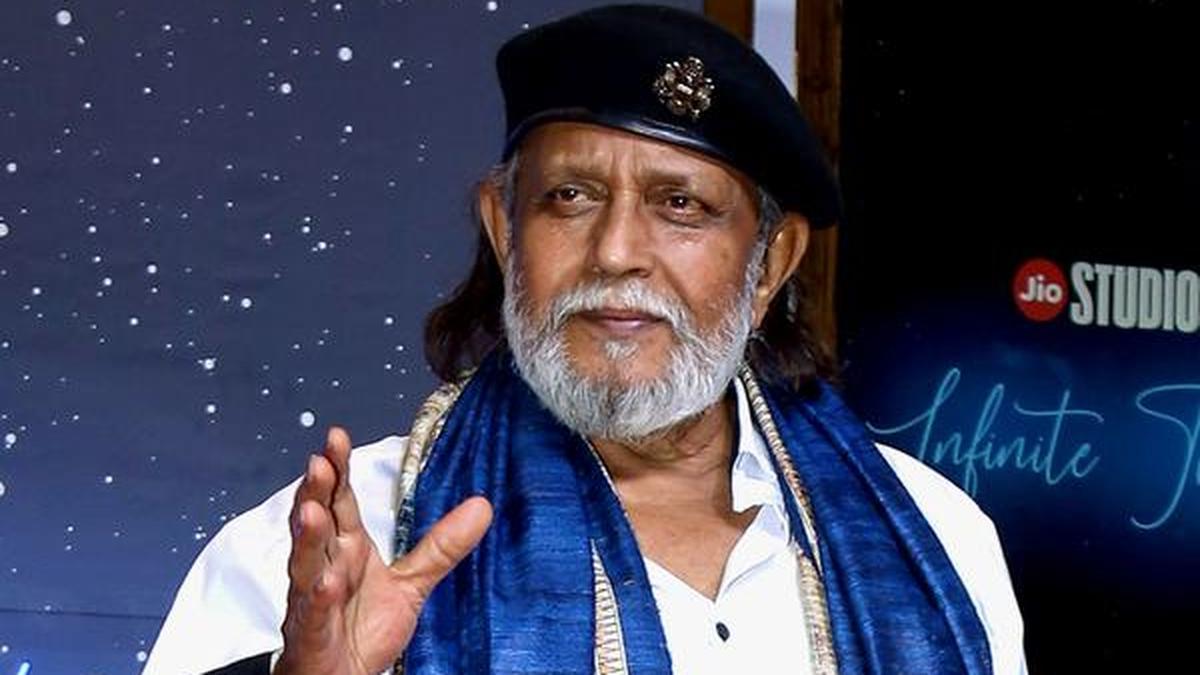
In an industry that elevates a new idol every Friday, Mithun Chakraborty has remained a resilient figure. On Monday, September 30, 2024, it was announced that Mithun Chakraborty would be the recipient of the Dadasaheb Phalke Award, a testament to his uncompromising versatility. Over the decades, Mithun has transcended the constraints of an actor’s image, navigating effortlessly between arthouse cinema, mainstream commercial films, and even productions aimed at frontbenchers.
Mithun’s journey began with Mrinal Sen’s critically acclaimed film Mrigayaa in 1976. He stands out as perhaps the only major Indian actor to have successfully made the leap from arthouse cinema to commercial blockbusters and back again. While his contemporaries like Naseeruddin Shah, Shabana Azmi, Om Puri, and Smita Patil ventured into mainstream cinema with limited success after establishing themselves in parallel cinema, Mithun not only tried his hand but also tasted significant success in both realms.
Working with luminaries of parallel cinema like Mrinal Sen, Buddhadeb Dasgupta, and Goutam Ghose, Mithun has bagged three National Awards, underscoring his calibers such as an actor. Transitioning to mainstream cinema, he collaborated with directors like B. Subash, K.C. Bokadia, Manmohan Desai, and Parto Ghosh. These ventures paid off richly with films like Disco Dancer, Dance Dance, Pyaar Jhukta Nahin, Ganga Jumna Saraswati, Agneepath, and Dalaal becoming massive hits. Disco Dancer, directed by B. Subash, established Mithun as an international star with the film doing blockbuster business in the Soviet Union, Japan, and China besides India. For a few shining years in the mid-1980s, Mithun Chakraborty emerged as India’s best-known face abroad.
. During an era when the ‘Angry Young Man’ persona of Salim-Javed ruled the roost in Hindi cinema, Mithun turned the box office dynamics on their head with his disco-themed performances and Bappi Lahiri’s infectious music.
In a brief spell in the late 1980s, Mithun challenged the supremacy of Amitabh Bachchan, inspiring director Manmohan Desai to provide him with a substantial role in Ganga Jamunaa Saraswati—an unusual move in an industry where heroes typically played second fiddle to Bachchan. However, Mithun’s most endearing legacy lies in his contribution to serious cinema, with notable appearances in films like Tahader Katha, Kaalpurush, Swami Vivekanand, and Gudiya. His understated performances in these neorealism narratives challenged the assumption that a commercial action hero couldn’t excel in serious roles. Films like Mrigayaa, Tahader Katha, Swami Vivekanand, and Kaalpurush earned him four National Awards, firmly establishing his prowess in arthouse cinema and broadening his appeal from first-day-first-show audiences to film festival circuits.
Mithun’s career has another intriguing, albeit less celebrated aspect. He stands as the first top-tier actor to consistently work in films crafted explicitly for less discerning audiences. By the mid-1990s, he altered the economics of filmmaking by shooting mainly in Ooty with a standard ensemble cast including Hemant Birje, Gautami, Deepti Bhatnagar, Kiran Kumar, and Raza Murad, supported by music from Dilip Sen and Sameer Sen. These low-budget movies, typically completed within a month for around ₹40 lakh, were released without much publicity in smaller centres, where they enjoyed considerable success. Films like Jallad, Chandaal, Dada, Hitler, The Don, and Cheetah never made ripples in metropolitan areas but still generated handsome profits, catering to Mithun’s loyal fanbase in smaller towns. Meanwhile, even as G.V. Iyer took eleven years to research for the long-gestating project Swami Vivekanand, Mithun managed to complete over 20 films, demonstrating his unparalleled work ethic and efficiency.
More recently, Mithun has appeared in supporting roles in films like The Kashmir Files and The Tashkent Files. These performances may well have influenced the decision of the three-member jury comprising former Dadasaheb awardee Asha Parekh, actor-politician Khushbu Sundar, and filmmaker Vipul Amrutlal Shah to honor Mithun Chakraborty with Indian cinema’s highest accolade.
Published – October 01, 2024, 08:53 AM IST
India
/Hindi cinema